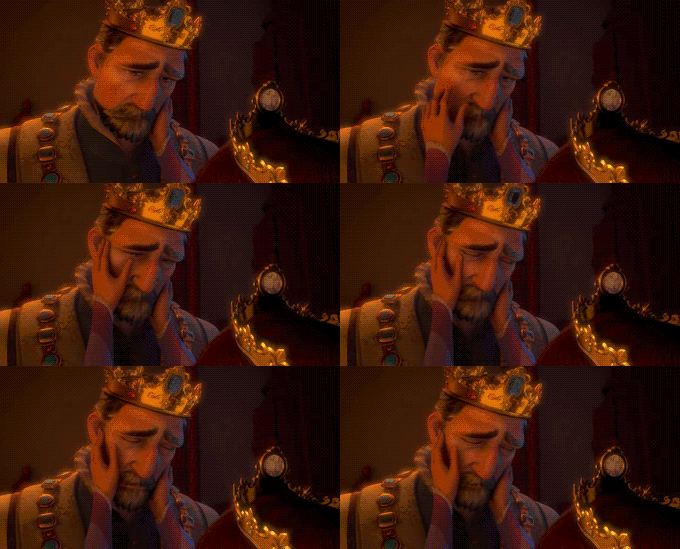
The King In Disney's Tangled
Every great reign has got to come to an end, and it seems
that the end of the King Arthur class will be included in this great ending. I
will miss this class and everything it was able to teach me about the man and
the legend. It explored the depths of the beloved king who I grew up with in writing
and through the screen of the television. He was the king that I thought all kings were supposed to be like, and as a small girl of eight watching Quest for Camelot, I thought that our country should also have a king like Arthur. Even when my mom explained that not all kings were good I did not believe her. Even as a kid, I still swore loyalty to King Arthur and even though he was not tangible, his beliefs and charisma had captured the heart of that little girl and continues to hold it to this day. So I was overjoyed to find and take this class on my beloved Medieval King, read about
something that was consistently present through my life, and analyze texts for their
relevance and believability.
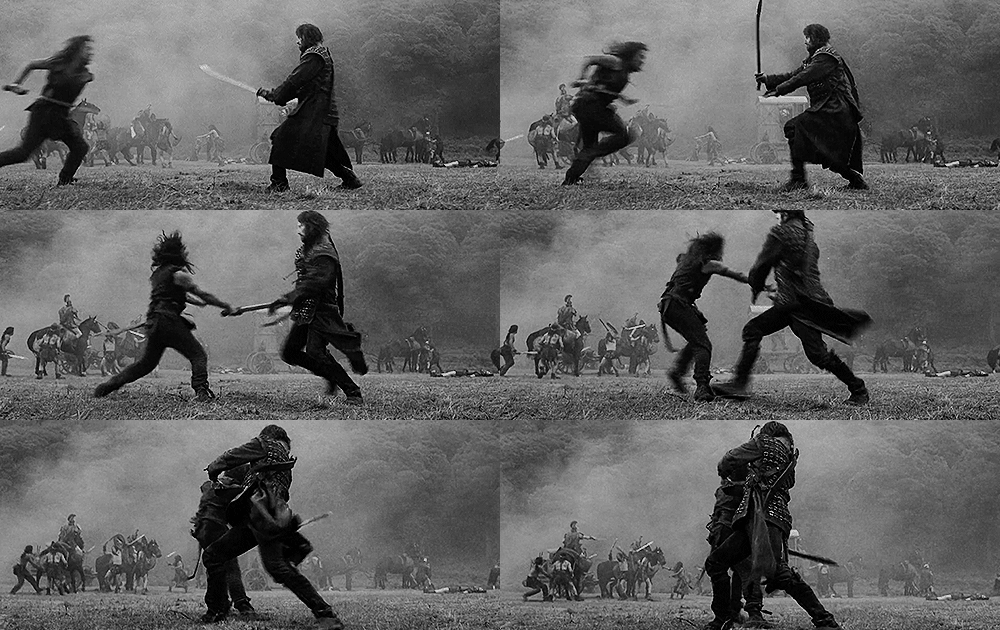

Tristan (top) and Galahad (bottom) in the King Arthur movie 2004
When I first began this class I thought that I really would not learn much more about a topic that I was well versed in. I believed that King Arthur was just one man with many knights, an evil son, a weird sister, a magical wizard, a loose wife, and a great kingdom. However, there are many faces and portrayals to the King Arthur legend and the king himself. Overall, I enjoyed learning about his fellow knights the most. This is why the reading of Le Morte D'Arthur by Sir Thomas Malory was my favorite reading of the class this semester. This is depicted above with Galahad and Tristan (or Tristram) as they fight their way to victory. I enjoyed hearing about the men who protect the king and are usually left in the shadow of Arthur or the other two well known knights: Lancelot and Gawain. In Malory's book he explores two knights that I had barely heard of before and it refreshing because with the new knights that I was learning about, there was a new adventure and story. There was a grail of greatness and a religious aspect to King Arthur that had nothing to do with war and defending God through combat. Also, Galahad was Lancelot's son, which frankly, I never read about the knights of the Round Table having children. There is a story of a boy of relatively noble birth fighting for greatness and honor without revealing his name because he had killed the son of the liege who he stayed with to heal. So Sir Tristram and his secretive name Tramtrist was a humourous and exciting twist on the King Arthur legend. It delves into the mind of a man and his journey to become a knight, much like the story of the Grail and how Galahad had refrained from fighting and sin to achieve holy goodness. They were exciting stories because they were new, and different, and although they were dry at times, I liked their message and story!
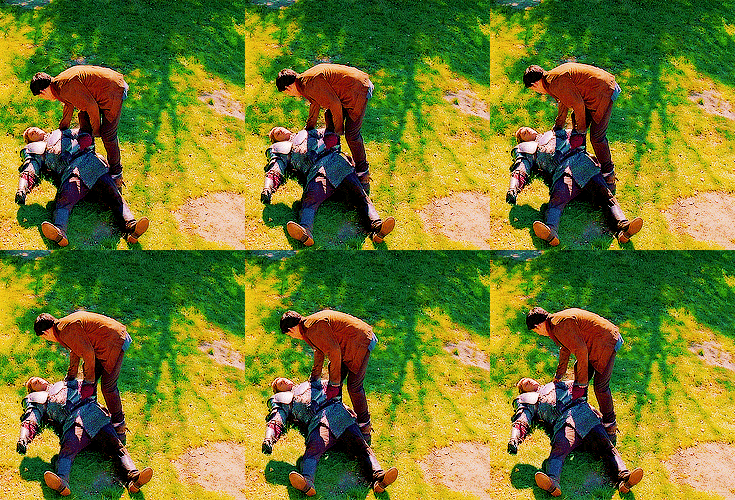
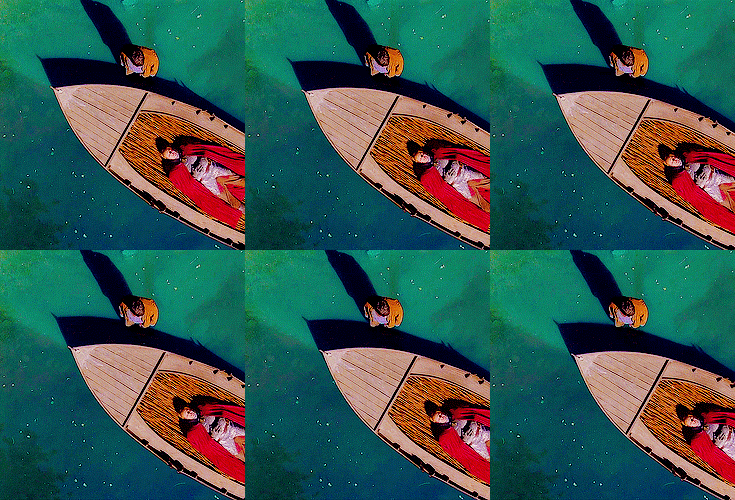
Arthur's death in the TV show Merlin
Although this class has explored the many faces of Arthur, including the child, teenager, adult, and old man who explored different gateways and personality traits like being righteous, honorable, lazy, ambitious, dependent, and wise I have realized that in the end, Arthur always dies. That he is human and not a machine that keeps going into time and space as an immortal shell of a man. He dies from flesh wounds just as his men do, and that makes him real, a leader that risks his life, and can die by the hand of a sword. Just like he is depicted in the Merlin series above; Arthur dies and his good friend Merlin watches him drift off as preparations for his Viking funeral. However, besides getting to read about Arthur's knights and their stories on becoming a chivalrous representation of the Round Table (and sometimes not) I was really happy to see this vulnerable side to Arthur. Although he may have Excalibur, steel armour, and a barrier of knights defending him he still fell because he was still a man who bled. The difference between Arthur and other kings also became apparent through this class. Arthur wanted a kingdom full of people; not an empty kingdom full of wives and children waiting for fathers, brothers, and sons to come back from a battlefield.
