Wednesday, April 2, 2014

Is That You, My Dear Sir?

                                             Lancelot in the movie Lancelot du Lac (1974)

I have always been intrigued by Lancelot in the legends of King Arthur. In all the compilations of movies that I have watched it was almost like all of these directors got together and had him drawn out and represented in the same way. He was the best sword fighter and lancer, the noblest of knights, and always had that darned beautiful flowing hair that will always rival all of his brother knights. Since I am very much obsessed with knights and their differences I sort of hone in on abnormalities or lack-thereof.

Although I first began to question everything I have ever known about Lancelot in Malory's Le Morte d'Arthur. In the Tale of the Sangreal, Lancelot's image changes drastically because through a series of steps it is shown that he is not  virtuous and sin-free beneath that hunk of shining armor.The people of King Arthur’s court have always been idolizing him; “Oh hey, Lancelot is beautiful, strong, and virtuous in every single way” that Lancelot’s core is never really talked about. I cannot really blame him, if people praised me every day I would probably get a little hot-headed too. The point is that in this tale Lancelot is not a golden pillar of greatness and being able to see his weaknesses helped to change my perspective on the knights I have filed away in my subconscious.
                                              Lancelot in the movie King Arthur (2004)

More recently discussed in class is the Sir Lancelot in regards to the Tennyson poem "The Lady of Shalott" in which he is once again that beautiful knight in shining armor that captures the heart of the lady toiling away in the tower. I know that technically Lancelot has nothing to do with the lady's foreboding death because he cannot help it if women fall for his pretty face and beautiful singing voice; however, it does put Lancelot in a bad light. At the end of the poem, he only glances at the poor lady's corpse which is "pretty" and she is put aside. Yet, he did not know the lady. I suppose Lancelot becomes a regular guy, and that in itself is upsetting because (in my mind) he was previously in a high place that was nearly otherworldly in virtue and bravery.


1 of  5

The Squirrel of Shalott

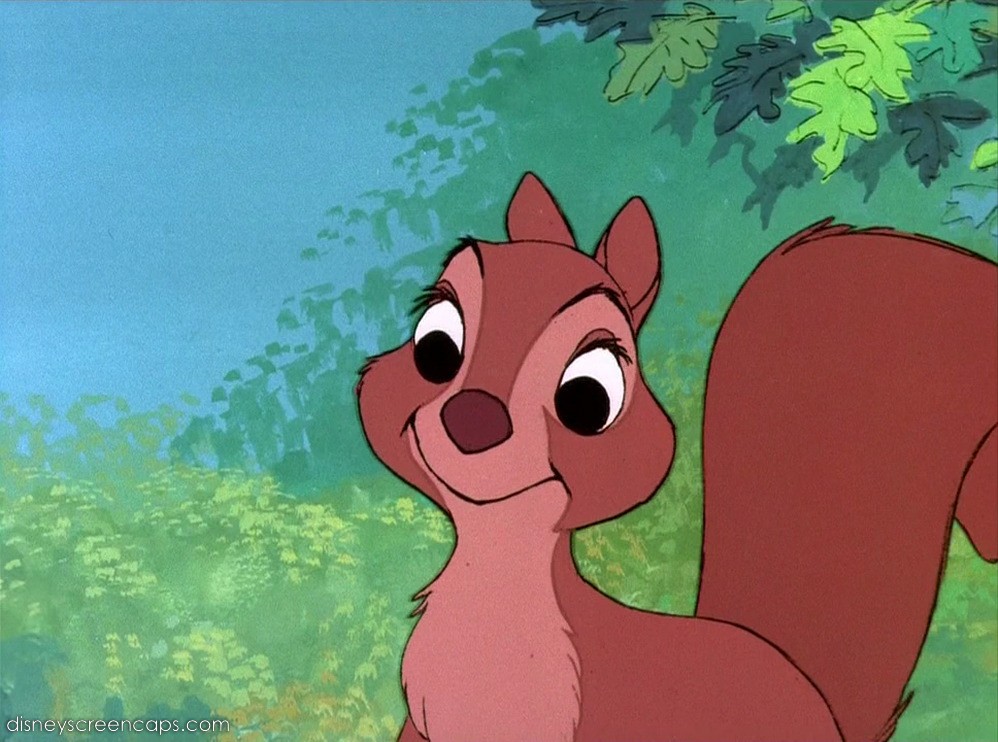
So, my group was assigned the movie The Sword in the Stone to present on. Today, I decided to rewatch it and while watching it, I noticed a parallel between "Hazel" the squirrel and the Lady of Shalott. Although, I don't know whether or not she dies -although it eventually will happen- she reminds me of the Lady that spent her days weaving. During one part of the movie she runs up a tree and into a borrow in it, while watching this it really made me think of how the fair maiden spent her days weaving up in the castle.
Looking for love with Hazel
This was really cool to think about because in the scene prior Hazel was all over Arthur, and quickly fell in love with him. This for me also parallels The Lady of Shalott because when the Lady saw Lancelot she quickly fell in love with him and because of if eventually brought about her own death. I won't go as far to say the Hazel brought on her own death by falling for Arthur, but the parallels between the two events are really interesting to see, whether or not they were on purpose of not.

King Arthur's Death

The talk of the past few classes has been on the death of King Arthur. We discussed a few terms relating to the poem and my group and I's was elegy. I found that discussing this word and its meaning helped me to better understand the context of the poem. It is a type of poem or song that is generally very sad regarding ones death. In that case, it made reading this poem not so enjoyful at first. Compared to most of the other readings, we're used to battles and crazy, energetic things occurring. I believe all of those stories were mad to build up to this poem. It was almost a shock when reading the poem because of how gloom it was. However it was calming and left you feeling like things were coming to peace. We built up this respect and honor for King Arthur because of his heroic moments and victories that took place so when it came to his end, it would effect us readers more emotionally. His stories give us something to remember and I think it was smart to make his last story into a poem considering poems are genuinely more in depth and have some type of deep meaning behind them.

Tuesday, April 1, 2014

Looking In the Mirror: Allegory and the Lady of Shalott


A woman and her loom: weaving for economic independence

The “Lady of Shalott” looks into the mirror as she weaves,why?  Kathryn Sullivan Kruger tells us that weavers using certain types of looms face the back of their tapestries and gaze at the front side of the tapestry in the mirror  (Weaving the Word: The Metaphorics of Weaving and Female Textual Production).  Weaving on that  type of loom, the weavers see only a reflected image of the art that they are creating. They do not have a direct experience of the image.  Tennyson’s mirror metaphor is a cleaver spin, in this case weave, on the ancient “Allegory of the Cave” in Plato’s Republic. 


The weaver's focus is on the work in front of her.  Most of us are like the weaver.  We pay attention to what is  before us and call it real.


Plato’s metaphor likens people’s perception of reality to that of prisoners in a dark cave, chained tightly with their back to a low wall, and unable to turn around.  Their field of vision, their perceived reality, is limited to the reflected images that appear on the back wall of the cave or what is in front of them. This cartoon clip is a bit long but does a nice job of explaining the allegory of the cave.  .


What do we stare at? What is in front of our face, or the Lady’s face, that we call reality?  The Lady is staring at her life’s tapestry.  What do we focus on?  Like the Lady, we weave threads of thoughts and ideas into the fabric of our consciousness and daily lives.  What cave or tower are we trapped in?  Are we aware of our chains?  Are the images that we stare at so engaging that we have trouble taking our eyes away from them to turn around and look at the sun?  Do we find comfort and security in what is familiar?                                                    
Backs to the wall 
We might think that we are different from the Lady and perhaps we are. I suggest that we are unwilling to turn ourselves away from the projected and reflected images that capture our attention.  The Lady of Shalott was brave.  She dared to leave her tower and turn toward the unfamiliar. Venturing outside brought death.


Growing up, growing old, and death are all rites of passage.  Eventually we all die.  Turning away from what she was told to do and thinking  for herself might have been Tennyson's response to Kant's essay "Enlightenment."    Allegories provide multiple possibilities.

What would happen if we put aside our technology for a day or two, ventured outside, and  turned toward the sun?  


Monday, March 31, 2014

Chasing Ghosts: Leaving Behind White Harts, Hounds, and Hunting


Imagine hearing tales of a rare white creature coursing through the forest.  Might the ghostly animal seem magical or like some rare omen?  We've been given a glimpse of this in our readings this semester


So far, the stories up through Malory contain tales of knights on horseback hunting deer, fox, and boar with their hounds. The move past Malory and into the picturesque poetry of Tennyson appears to be a long ride away from the visceral images of battle 
fields and hunting. The first half of the Arthurian semester was blood splattered and littered with body parts.  There was one hunting term I needed to look up.  One of them was "hart." In this part of the country we tend to call male deer (OED) bucks. Harts tend to be over five years old so they are larger and have bigger racks or antlers.


It is the white hart of Malory's Le Morte d'Arthur that captured my attention.  Do white deer exist?  I have seen white-tailed deer, I like to call them Maryland’s “suburban lawn rats,” but never an albino deer.  
White hart- a buck
On rare occasions, I have seen a piebald deer.  Piebald deer are white tailed deer that have  brown and white patches of hair.  They are not part albino but have a genetic anomaly  that may present with other physical defects.  Albino deer, white deer herds, and piebald deer are unusual for good reason.

Piebald deer


Piebald fox--genetically domesticated.  You can get one for about $8000!

Unless living in an area covered in snow most of the year, a white deer and piebald deer would be at an extreme disadvantage.  White coloration, or absence of color, makes animals easier to see—good for the predators, human or otherwise. Some animals become piebald when they become genetically domesticated. When foxes become domesticated, in as little as 20 generations, they become piebald.  


The knights in Arthurian legend, and in history, did indeed hunt on horseback and with hounds or “stag” hounds.  In the United Kingdom, hunting means hunting on horseback accompanied by dogs. Americans often think of this as simply fox hunting.  Hunting became illegal in  most of the UK around  2005.  It is still practiced in Northern Ireland.  People are still allowed to “stalk” game on foot and shoot game—there are regulations, restrictions, and seasons.  In the United States each state has their own hunting and licensing regulations.

 In my neighborhood, people still foxhunt. 


Lady of Shalott: Final Thoughts


To conclude the poem of Tennyson’s “Lady of Shalott”, I would just like to follow up with just a few more thoughts before moving on to the “Idylls of the King”.  When it comes to the lady looking down the stream into Camelot, I knew it wouldn’t be a smooth sail into the town when the comparison “Like some bold seer in a trance, seeing all his own mischance- With a glassy countenance did she look to Camelot”.  After finding out that ‘mischance’ basically meant bad luck, I knew things were not going to end well for this lady.  Like we discussed in class, I agree that dying from your blood freezing would definitely be a terrible way to go, but at least she was singing up to that point and supposedly died without pain.  I don’t think I’d sing knowing that my body was going to end up lifeless in some town I’ve never been to.  As for the townsfolk of Camelot “crossing” themselves for fear, I would also be frightened to see a dead woman’s body flowing down a stream.  It would definitely add more hype had these townsfolk assume that the grim spectacle to be an “omen” as we had discussed.  Lastly I would just like to say that I stand to my comment made earlier during class which was my theory as to how Tennyson portrayed Lancelot as the bravest of the other fear-stricken knights because he was brave enough to say something positive about the “unknown” lady.

http://commons.wikimedia.org/wiki/File:John_Atkinson_Grimshaw_-_%22The_Lady_of_Shalott%22_-_Google_Art_Project.jpg

I thought this photo representation of the Lady of Shalott by John Atkinson Grimshaw was pretty spot on and was the exact what I had imagined when reading the poem.  The white robe that she was wearing and how it looks like she is pale from her frozen blood paints a perfect image.  
J.H

Sunday, March 30, 2014

One Sword to Rule Them All

Reading over the stuff for Monday's class, I kept being brought back to the sections of the poem dealing with throwing Excalibur into the lake.

First off, I just want to say that if i had something as beautiful as Excalibur as it was described in the lines around 51 I wouldn't want to get rid of it either. throw in the fact that this swords is magical and involved in amazing fights and not just something that is pretty to look at, why would anyone want to just throw it away?! When i was reading this, first thing that popped into my head was that wonderful movie The Lord of the Rings:


Anyway, that's enough with that first encounter.

Encounter 2!
Again I find myself sympathizing with Sir Bedivere in his actions. Again with this beauty thing and all that jazz but then going on to it as a symbol. Of course he thinks it'd be great to have a symbol or token or whatever you want to call it for people to be able to look at and remember the legendary King Arthur! I know I personally find it easier to remember someone if there is that object of correlation, he's just looking out for the kingdom. Disobeying a sickly king who he thinks is more or less crazy at this point, who would argue with him?

Aren't knights supposed to do what they are told no matter what? Isn't this kind of going against the whole knightly code, disobeying the king? couldn't that get you killed?

Isn't death a great motivator?

Anyway, That's about all I have right now. Shiny things are fun, aren't they?

Post 1 out of 5